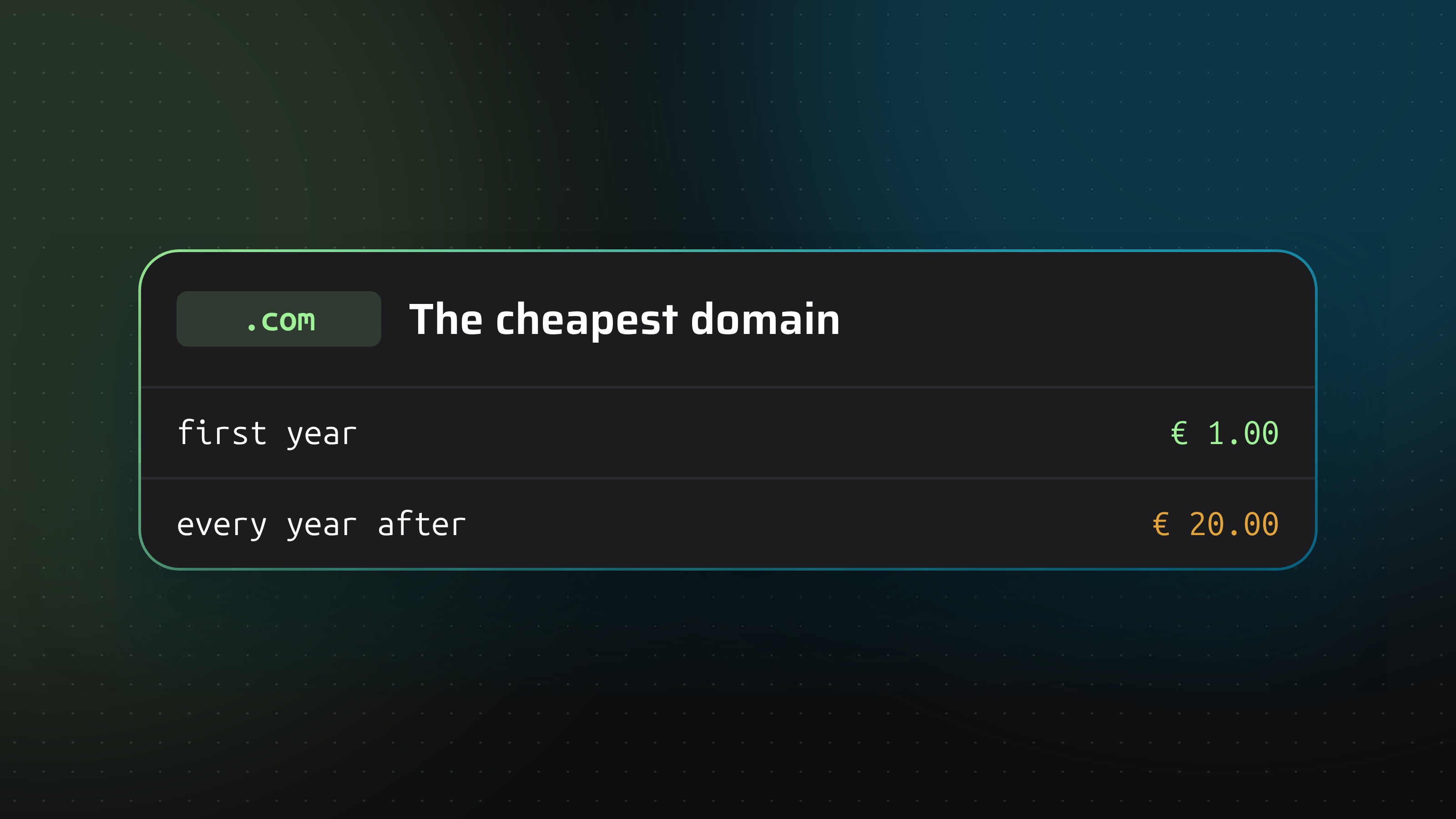
The cheapest domain is the one with the lowest total over the years you keep it. Registrars know you look at the first-year price, so that is the number they compete on. The renewal, which you pay every year after, is where many of them earn it back.
Where the price comes from
A domain price has three parts:
- The registry fee. Every extension has a registry that sets a wholesale price per year. For
.com it is capped by contract and goes up in steps, and at the time of writing it is around ten dollars a year. Check the current figure for your extension, because it changes. - The ICANN fee. About twenty cents per domain per year. Negligible.
- The registrar's margin. The only part that differs between registrars.
So a .com for one euro is not a bargain, it is a subsidy. Someone expects to earn it back, and that someone is you, at renewal. The room for a real discount on a common extension is small. The room for a trap is large.
The five prices to compare
Look at VAT and currency too. Some price lists show amounts without VAT, some in dollars, and a euro price and a dollar price are not comparable until you convert them.
Do the sum over five years
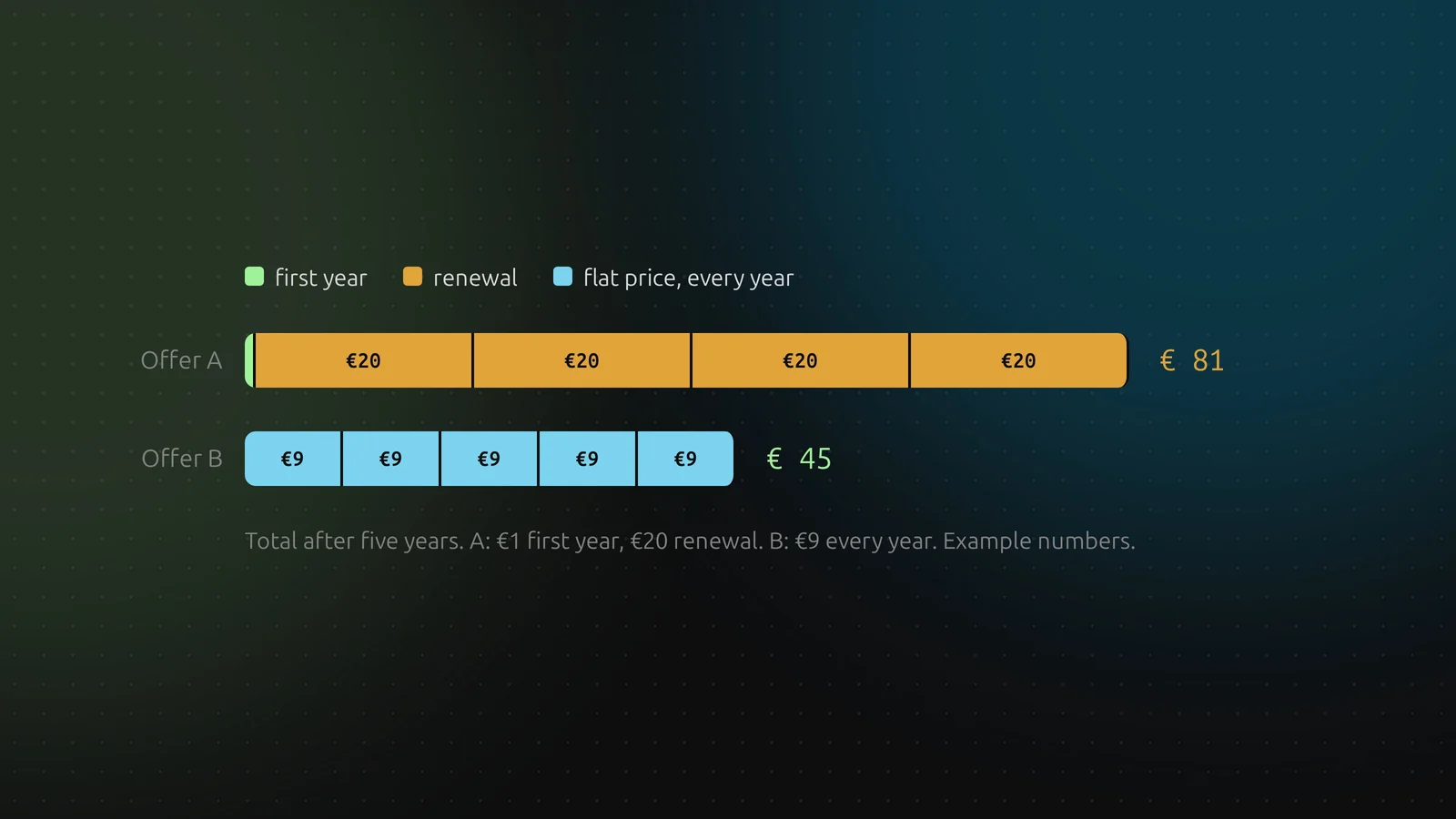
Take two offers. A charges 1 euro for the first year and 20 euro for each renewal. B charges 9 euro, every year.
After one year A looks like the winner. After five, it has cost nearly twice as much. The numbers in the picture are made up, but the shape is common. Whenever the first year is far below the renewal, do this calculation before you buy.
Some other offers that look cheap:
- A free domain with hosting. Usually free for the first year, then renewed at the full rate. Check that you can transfer the domain out, and what that costs.
- A coupon code. Coupons almost always cut the first year only.
- Several years upfront. Worth it if the renewal rate is good, and some registrars hold the price for the whole term. If the renewal rate is bad, you only pay the bad rate in advance.
The name decides more than the registrar
- The extension.
.com is mid-priced and the safest choice. Some extensions cost much more per year, and some are nearly free the first year and expensive after. A very cheap extension is not always a good idea: some are used heavily for spam, and mail filters are stricter with them. Also check the rules. A number of country extensions ask for a local address. - The length. Length does not change the price. Common advice to "choose a longer name because short ones cost more" is wrong. A short name costs more only when the registry marks it premium.
- Premium names. A premium name is priced individually, from tens of euros to thousands. It shows up as available and can still cost 89 euro for the first year. Check the price before you click buy.
- Names that are already registered. Marketplaces such as Sedo, Afternic and Dan list them. Use escrow, and look at the history of the name first (the Internet Archive, blocklists) so you do not buy a name with a bad past.
Before you pay for anything, check the name against trademarks and the social handles you need. A cheap domain you cannot use is not cheap.
Compare registrars in one search
If you have accounts at several registrars, ten browser tabs are not needed. A name is available or not at the registry, so it is available at all registrars or at none. Only the price differs, and how a registrar treats premium names.
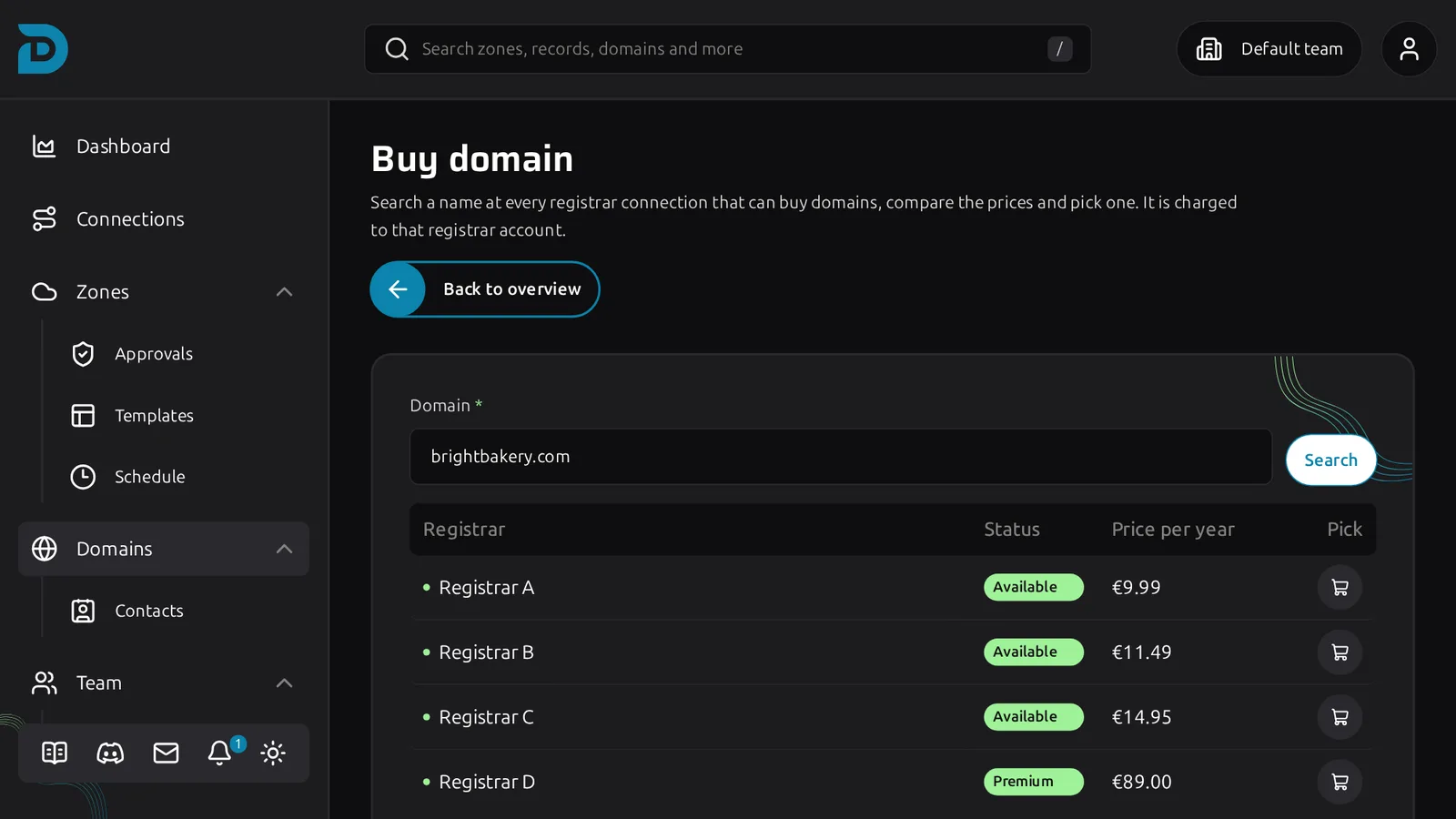
DNSense is not a registrar. It works through the accounts you have connected. In Buy domain you type a name and DNSense asks every connected registrar that can buy domains at the same time: GoDaddy, Namecheap, Openprovider, Porkbun, Route 53 and TransIP. Each row fills in when its registrar answers, the cheapest buyable result comes first, and premium names carry a Premium tag.
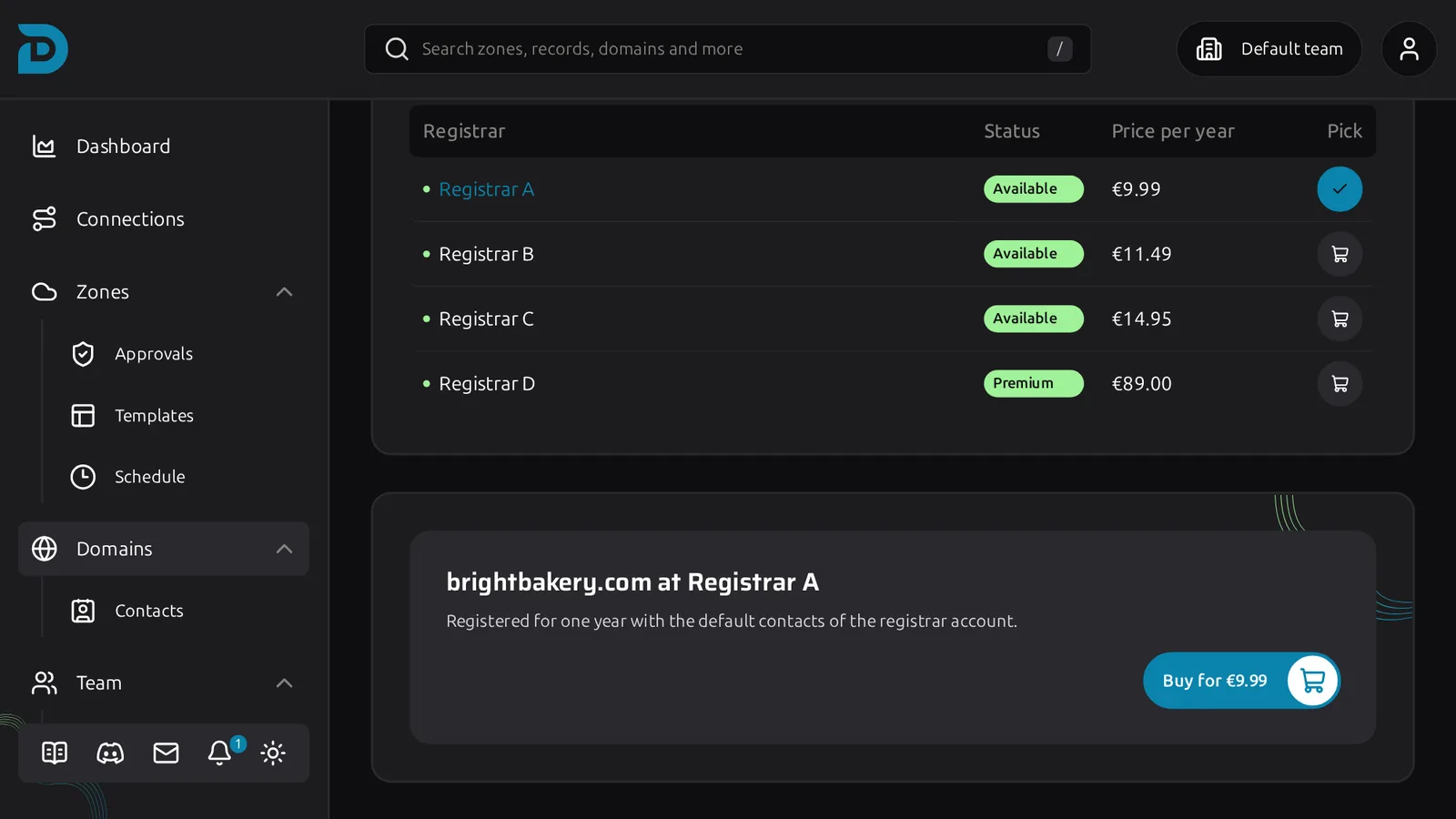
Pick a row and you see what happens next: the domain is registered for one year at that registrar and charged to that account. With GoDaddy, Porkbun and TransIP it uses the default contacts of the account. Namecheap, Openprovider and Route 53 need a registrant, which you choose from your contact book.
The screenshots show sample prices. Three limits to know about:
- The search shows the first-year price. The renewal is not in the answer, so look it up at the registrar of the cheapest row before you buy, and do the five-year sum.
- The list sorts on the number shown. If your accounts bill in different currencies, convert before you trust the order.
- A bought domain appears in the overview once the connection has synced.
After you buy
- Switch on auto-renew and put the expiry date in a calendar. The domain overview in DNSense lists expiry date and lock status for every domain, whichever registrar holds it. See domain management.
- Verify the registrant email if the registrar asks. If it stays unverified for about two weeks, the domain can be suspended.
- Keep the domain locked until you plan a transfer.
- Point it somewhere. Add the records you need. A records explained covers the first one, and how long DNS changes take tells you how long to wait before you check.
Mistakes that cost money
- Buying a one-euro domain and not looking at the renewal.
- Buying many extensions "just in case" and paying each of them every year.
- Registering through a hosting bundle that makes transferring hard.
- Forgetting to renew. The restore fee is the most expensive line on any price list.
- Hunting for the last euro. Between two honest registrars the difference is small. The renewal trap is not.